How to play
The things worth knowing, from your first steps on the square of Hearthmere to the last rift.
The game in a minute and a half
Controls
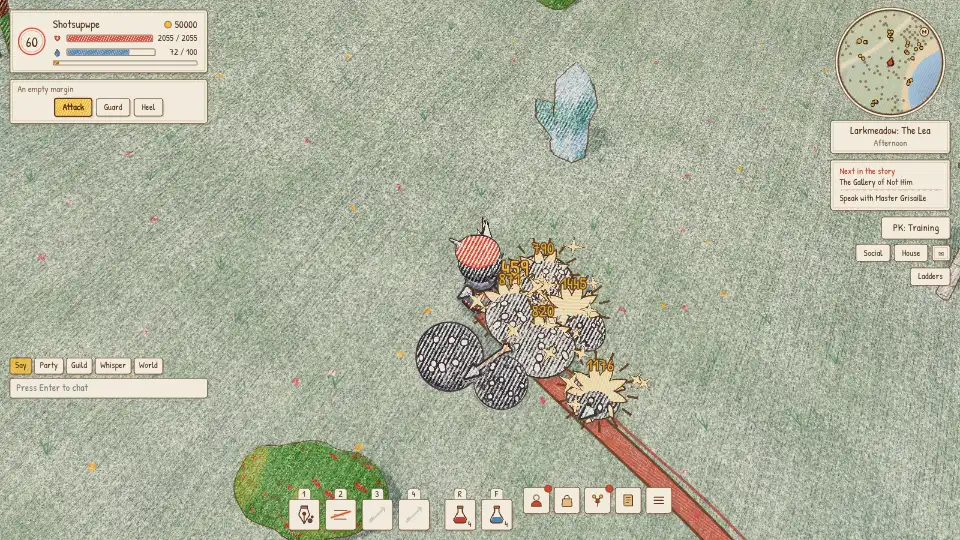
The game plays with keyboard and mouse, and with touch on a phone or tablet (turn it sideways for a wider view).
- W A S D or the arrow keys walk.
- Hold the right mouse button and drag to turn the view; the wheel zooms.
- Click a creature to attack it, or a person to talk.
- 1 2 3 4 use the skills on your bar; R and F drink your tonics.
- Space evades: a quick roll out of harm.
- E talks, opens chests and doors, and picks the next line in a cutscene.
- I bag and gear, C character, K skill tree, J journal.
- Enter opens the chat. Escape closes a panel or opens the menu.
Combat
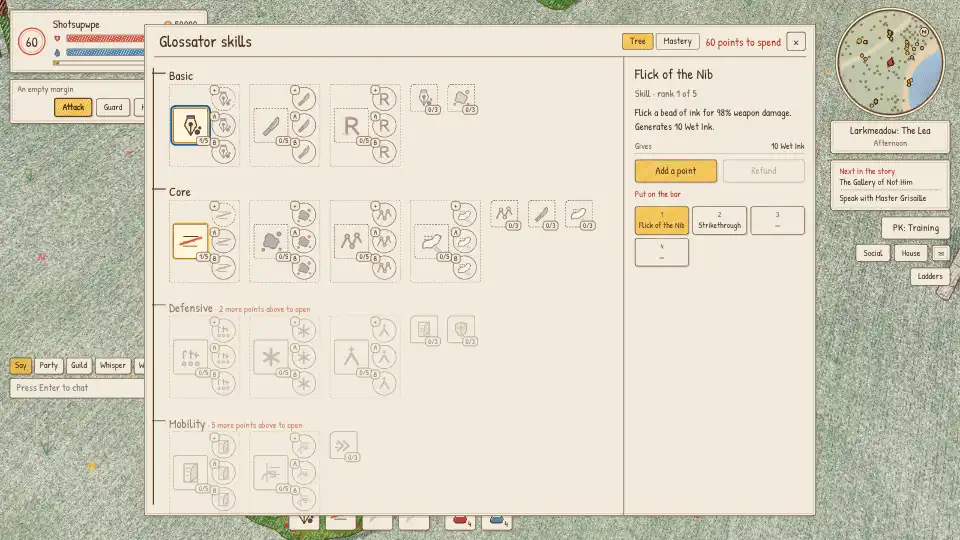
Each class fills its own resource and spends it on skills: Resolve, Focus, Breath, Rapport, Wet Ink or Compute. Basic skills give it, core skills spend it.
Watch the ground. Hatching on the ground warns of a blow before it lands: step out of it or press Space. Elites hit harder and carry extra powers; bosses fight in phases.
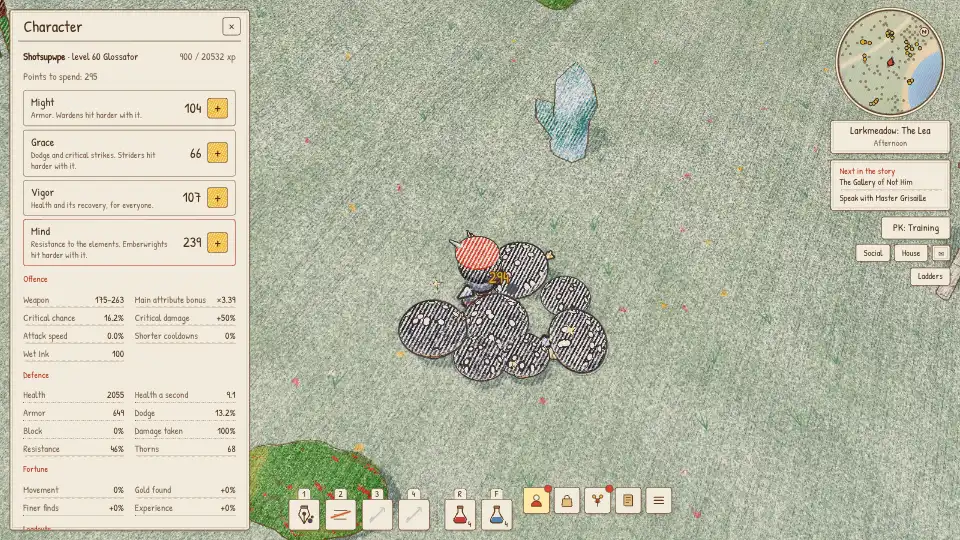
Levels give attribute points (C) and skill points (K). Learn skills on the tree and put them on your keys. Later, the mastery board grows your hero further.
Quests and the journal
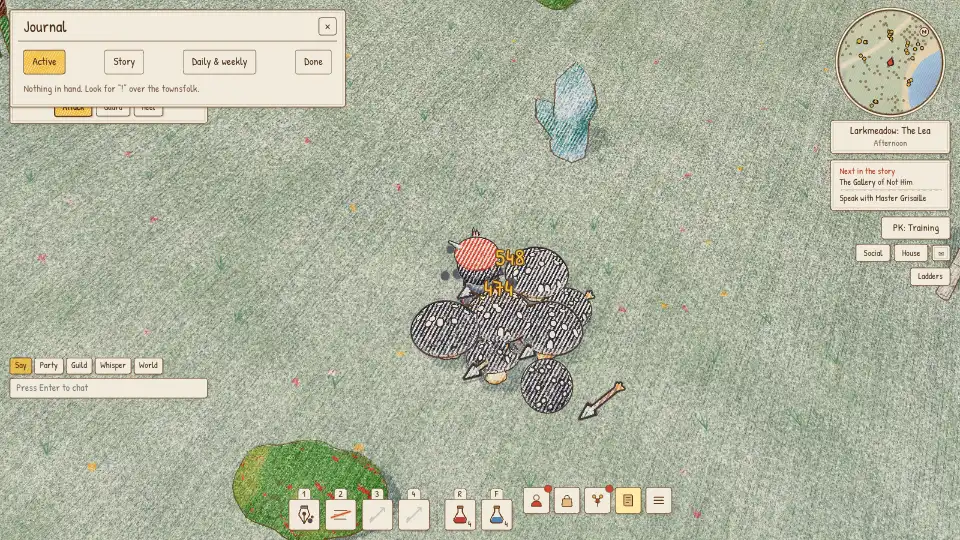
A “!” over someone means they have work for you; a “?” means they are waiting to hear from you. Your journal (J) has four tabs: Active, Story, Daily & weekly, and Done. Track a quest to see its steps on the screen and its places on the map.
The main story runs in chapters, with cutscenes along the way. The bounty board in each town gives daily and weekly work. A few doors open only when the story says so.
Party, guild and chat
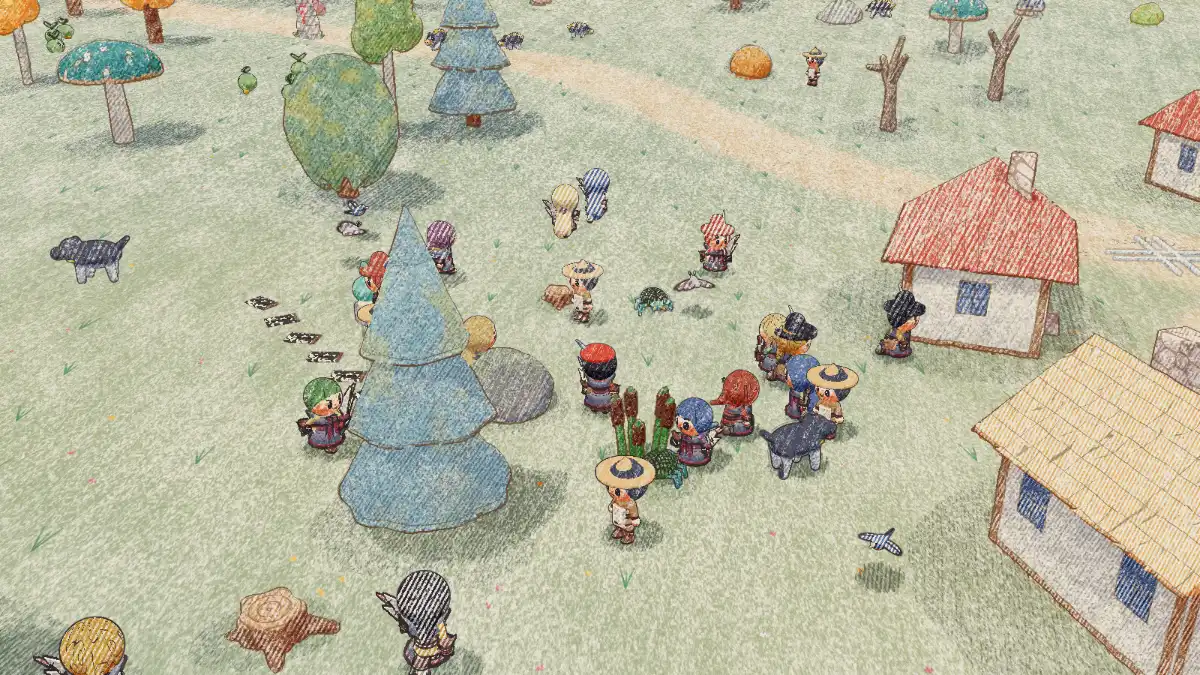
Invite up to four friends into a party of five: you share experience and kill credit, and see each other on the map. Guilds have ranks and a tag over your name. At level 10 the first chapter ends with your sorting into one of three academy houses: Studio Chalk, Studio Graphite or Studio Sepia.
The chat has five tabs: Say (people near you), Party, Guild, Whisper and World. Type /w Name and your message to whisper.
PK modes and red names
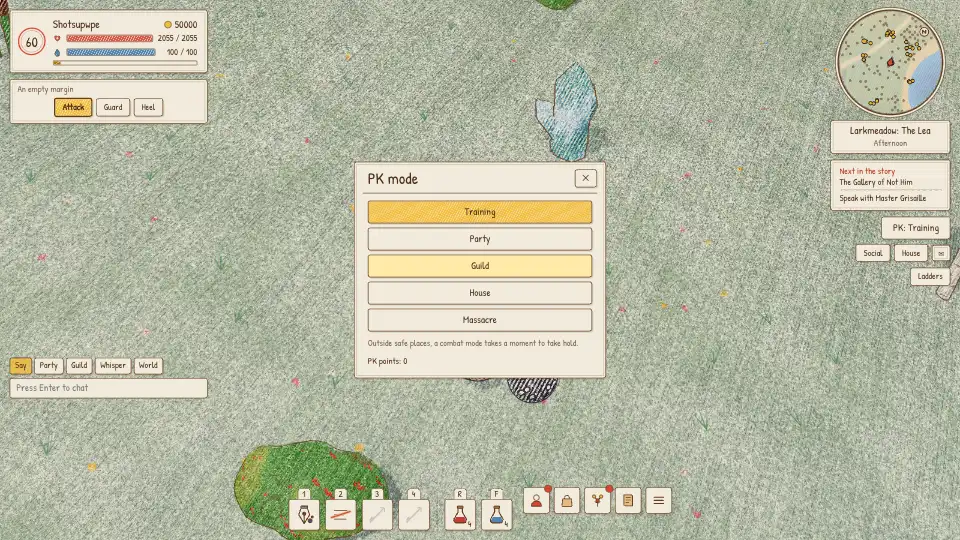
Below level 20 nobody can fight you and you cannot fight players. After that you choose a PK mode. A switch to a fighting mode takes 10 seconds, and going back to Training needs 60 seconds of peace. Towns and markets are safe areas: no player can hurt another there.
- Training: you fight nobody. A Massacre player or a vendetta hunter can still attack you in the open.
- Party: you can fight anyone outside your party who is not in Training.
- Guild: anyone outside your guild who is not in Training.
- House: players of the other academy houses who are not in Training.
- Massacre: anyone outside your party. Your name turns orange while you are in it.
- Vendetta: not a mode but a hunt. For gold, from level 30, you mark one named player for 30 minutes, whatever their mode.
Hitting a player who was not hostile to you makes you an Aggressor (orange) for a minute: anyone not in Training may then hit you back. An unlawful kill gives PK points. With points your name turns red; with five or more you are an Outlaw (dark red). A red name loses some experience and may drop worn gear when killed, town guards attack it, and merchants and the market clerk will not serve it. Points fade with time online, or through penance quests.
Market and mail
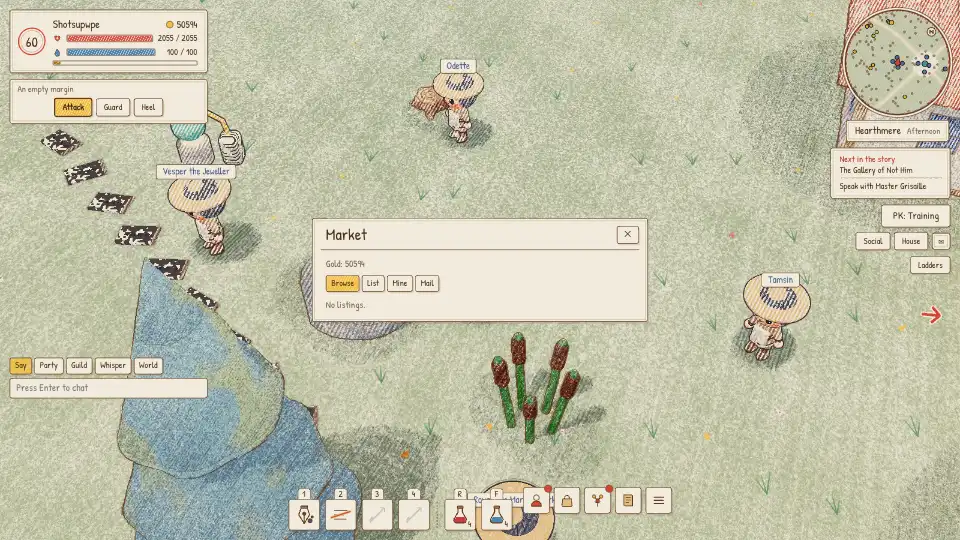
Each realm has one market, at the market clerk in town. Listing an item costs a fee of 2% of the price (at least 10 gold), and a sale pays the seller the price less an 8% tax. You may have 20 items for sale; a listing that does not sell in 48 hours comes back.
Everything the market moves arrives by mail: the item you bought, the gold you earned, the listing that came back. Take it at the mailbox in any town. Season rewards and event rewards come by mail too. Unclaimed mail is kept for 30 days.
Crafting and upgrades
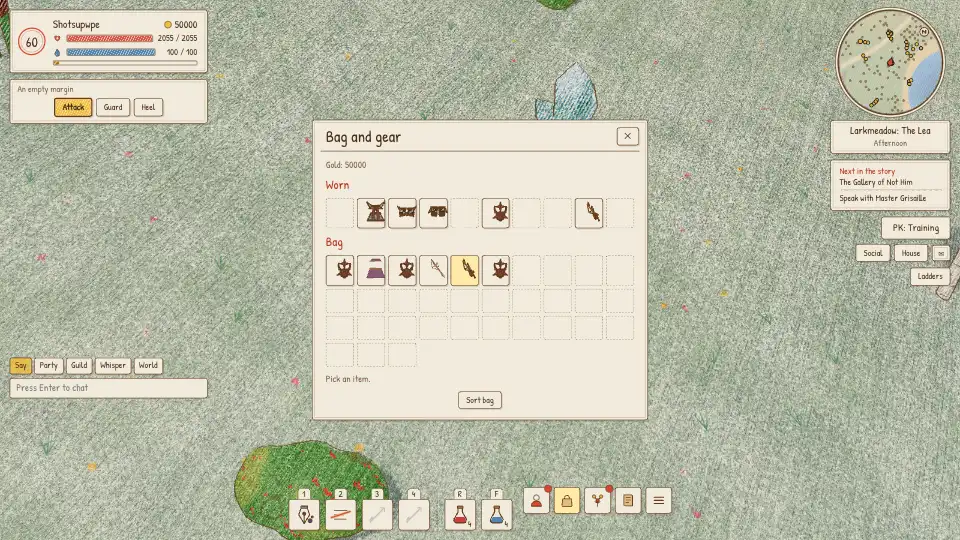
Salvage the gear you do not need for materials, then take them to the town’s craftspeople. The smith crafts from recipes, upgrades items up to +10, imprints a legendary power and rerolls a property. The jeweller adds sockets, sets gems in them and combines three gems into one of the next grade.
Upgrades to +5 and beyond can fail, and once an item is +7 a failure drops it a level, unless you use a ward. The crafting rates page has every chance and cost.
Dungeons, rifts and world bosses
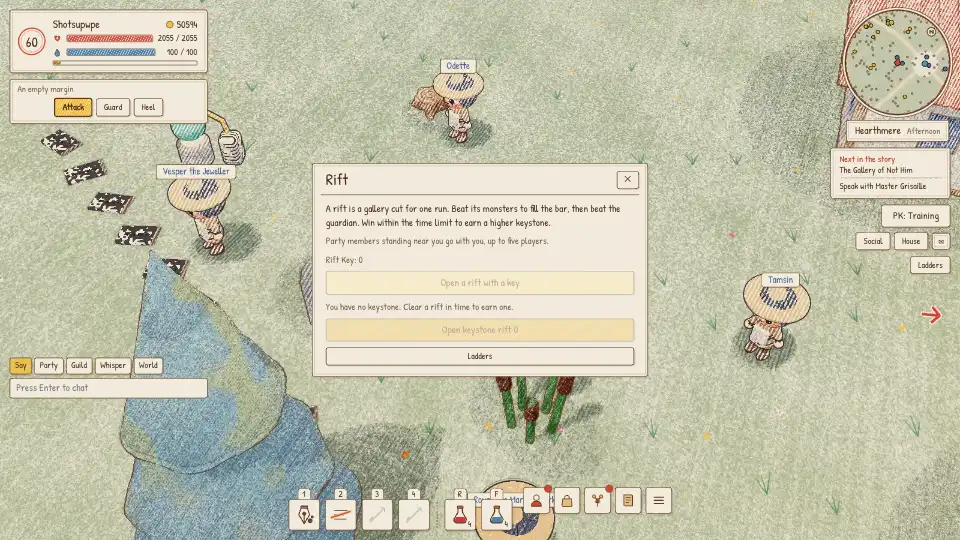
Dungeons are crypts and caves that end in a boss. From world tier III, elites and bosses drop keys that add powers to a dungeon’s monsters and better loot to its end.
A rift is a gallery cut for one run, open from world tier III. Open it at the rift obelisk in town with a rift key: beat its monsters to fill the bar, then beat the guardian. Win within 15 minutes to earn a keystone, and keystone rifts go up to level 150, with ladders for the fastest.
World bosses come on a schedule: everyone who helps to bring one down gets loot, once a day per boss. Lair bosses are summoned with rare materials, for you and your party.
World tiers
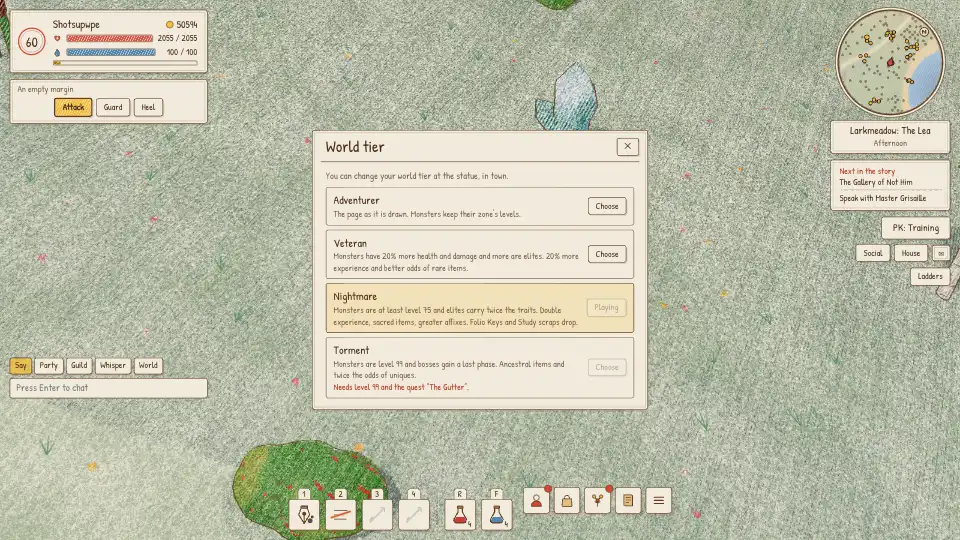
Change your world tier at the statue in town. Each tier makes the monsters stronger and the rewards richer: Adventurer, then Veteran after a story quest, Nightmare at level 70 with sacred items, and Torment at level 99 with ancestral items.
Dailies and events
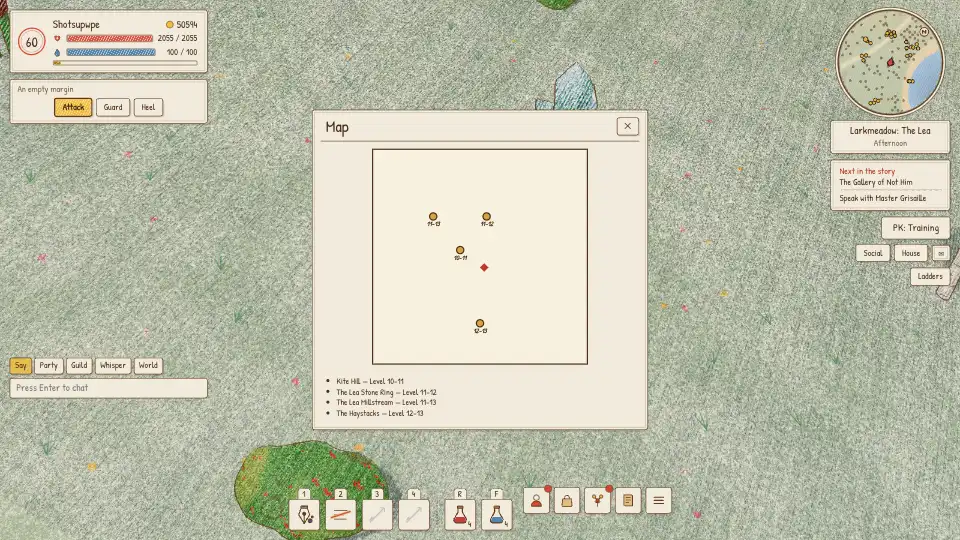
The bounty board and the townsfolk have daily and weekly work. World events come round on a clock in the open world, such as a Spillover in Larkmeadow every few hours, the Inkwell rising there, or the Hanging in the Withy Fens on Sundays. A sign warns you before a world boss arrives.
Seasons
A season lasts about three months. A seasonal hero starts at level 1 in a fresh realm with everyone else; the season journey gives gold and titles for its goals, and the ladders crown the fastest. When the season ends, seasonal heroes and their things move to the eternal realm, and a new page begins.